

Invisible Fence® vs. DogWatch®: A 2026 Guide for Eastern CT & Western MA Pet Owners
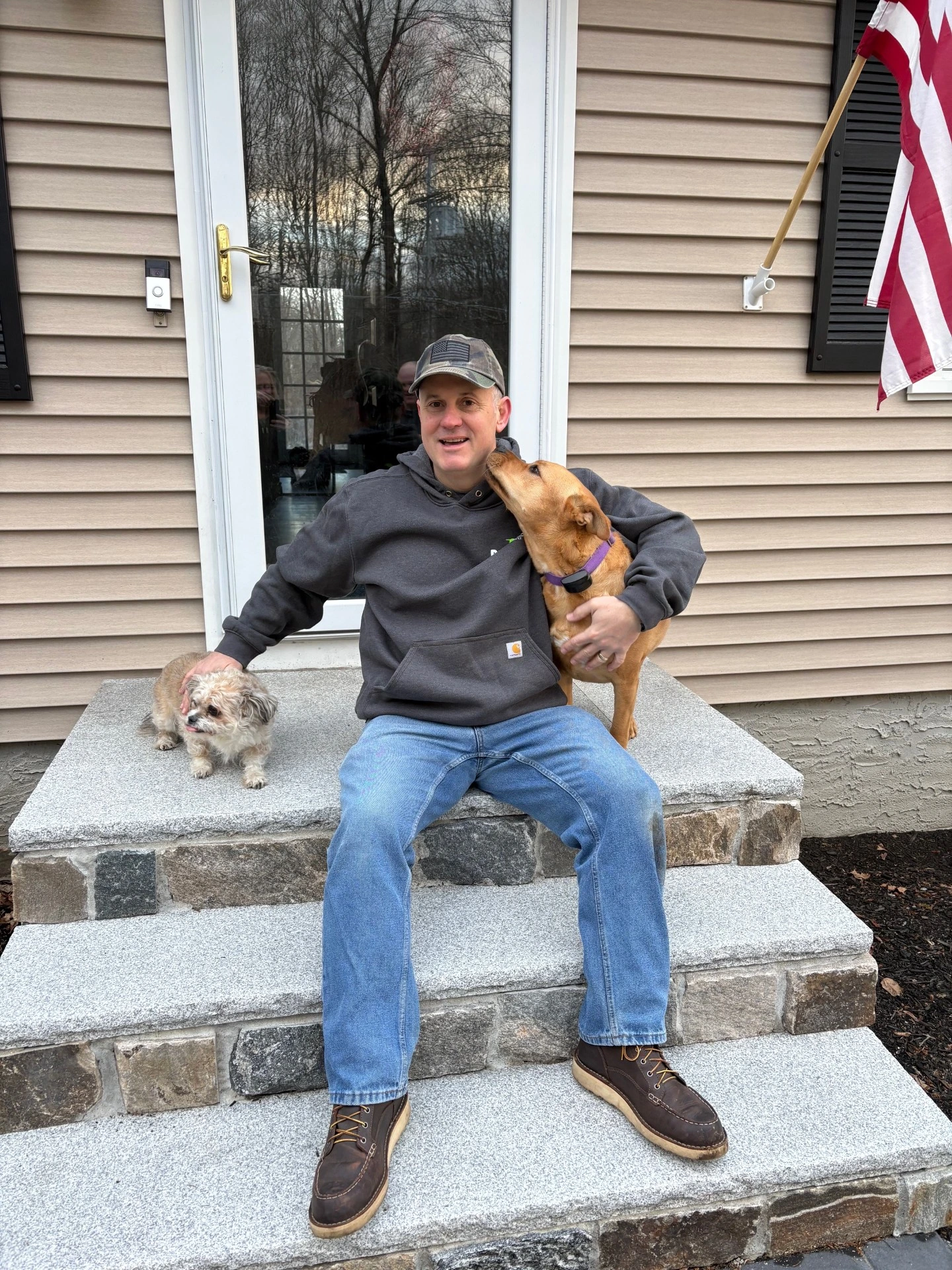
Thinking about a hidden fence for your dog in Eastern Connecticut or Western Massachusetts? You’ve probably seen the Invisible Fence® brand name — it’s become shorthand for the whole category, the way “Kleenex” did for tissues. But it isn’t the only option, and for most New England properties it isn’t the best one either. This guide is the honest, jargon-free breakdown we wish every pet owner had before they signed their first contract. No sales pitch, no fine print — just the questions, numbers, and local realities that actually matter.
- Both Invisible Fence® and DogWatch® are professionally installed hidden fence systems. On paper they look similar.
- The real differences are signal type (AM vs FM), battery cost over the life of the system, and local service quality.
- In our wooded, hilly, stone-walled New England service area, FM signal and standard off-the-shelf batteries matter more than most people realize.
- Ask any installer the five questions at the bottom of this page before you sign a contract. If they can’t answer all five clearly, keep shopping.
How Hidden Fences Actually Work
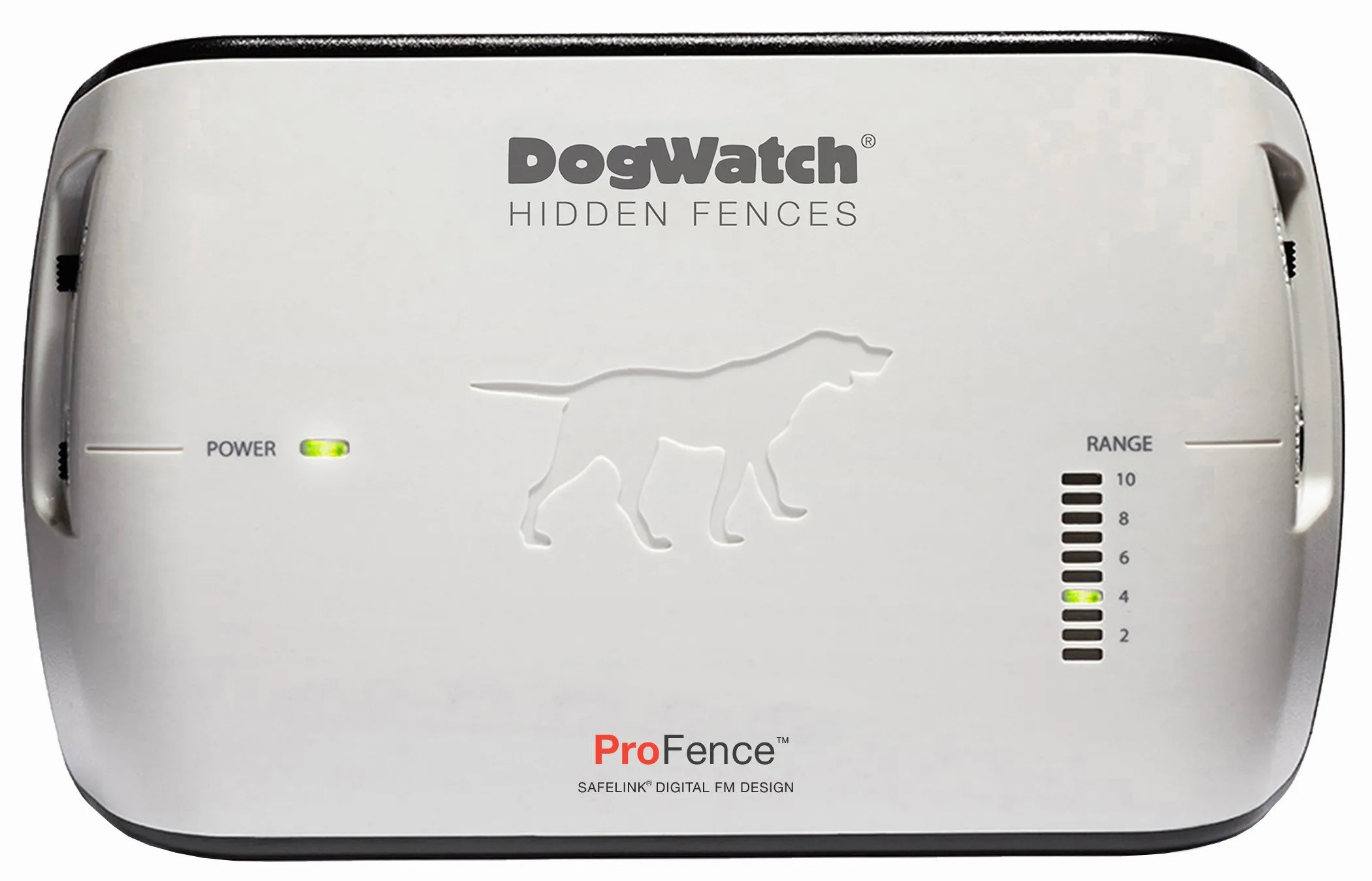
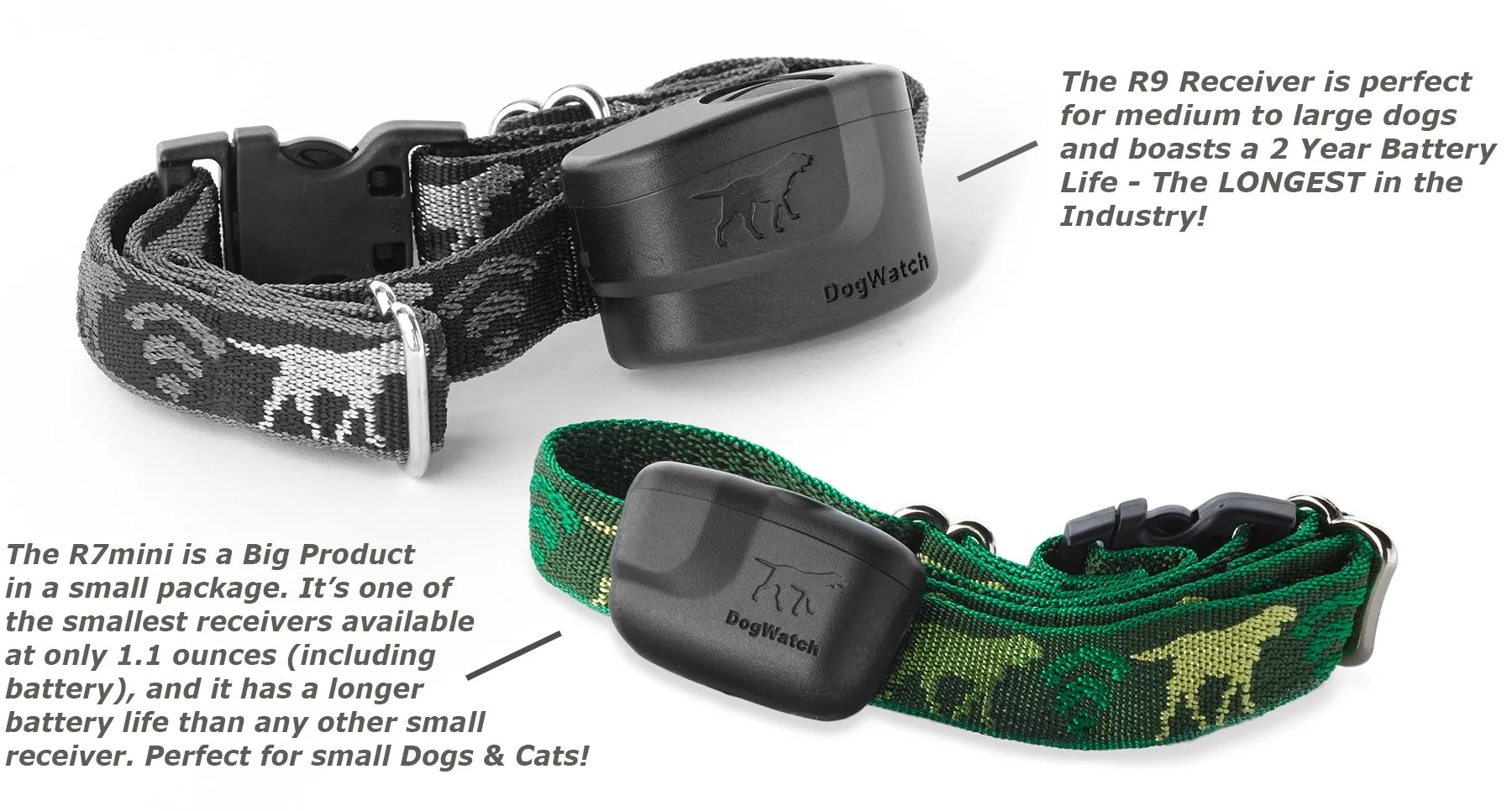
Every professionally installed hidden fence has three pieces: a transmitter mounted in your garage or basement, a boundary wire buried a few inches below your lawn, and a receiver collar your dog wears. The transmitter sends a radio signal through the wire. When your dog gets close to the boundary, the collar gives a warning tone, then a brief static correction if they keep going. After a short, positive training period, most dogs learn the boundary in under two weeks and never test it again.
That’s the basic architecture behind every system on the market — Invisible Fence®, DogWatch®, PetSafe®, Dog Guard®, and the rest. The engineering underneath is where they start to separate, and the engineering is where your experience as an owner lives or dies.
AM vs. FM: The Signal Difference That Actually Matters
Most hidden fence brands — including Invisible Fence® — use AM radio signal to talk to the collar. AM is cheap to implement and it works, but it’s susceptible to the same kind of interference that makes AM radio stations crackle in a thunderstorm or near power lines: garage door openers, nearby high-voltage lines, underground utilities, electric fencing on adjacent properties, lawn mower ignitions, invisible-dog-fence systems on neighboring lots, and even certain household appliances.
DogWatch® uses a patented FM signal called SafeLink®. FM rejects ambient electrical noise the same way your FM car radio does — the audio stays clean even when you drive past a factory or under a high-voltage line. In hidden fence terms, that translates to fewer false corrections. A false correction is exactly what it sounds like: the collar fires when your dog is nowhere near the boundary. It’s confusing for the dog, it erodes their trust in the system, and in the worst cases it causes dogs to refuse to go in the yard at all — which defeats the entire point of installing a fence.
If you live in a neighborhood with overhead power lines, an older home with legacy wiring, or you run a lot of equipment on the property (tractor, generator, welder, ham radio, solar inverter), the AM vs. FM question is not academic. It’s the difference between a system you forget about and one you fight with.
Why This Matters Even More in New England
Our region has a dense patchwork of old utility lines, buried cables from decades of homeowner DIY projects, and — increasingly — large-scale solar arrays that kick out measurable EMI. In a blind test on a rural lot with a ground-mounted solar array 80 feet from the containment boundary, an AM collar logged dozens of stray triggers per day. The FM-based system on the same lot logged none. That’s a real-world difference, not a spec-sheet one.
The Battery Math Nobody Shows You
Here’s a cost comparison most sales brochures quietly skip:
| Battery Specs | Most AM Systems (incl. Invisible Fence®) | DogWatch® |
|---|---|---|
| Battery type | Proprietary module | Standard off-the-shelf |
| Typical lifespan per battery | 3–4 months | Up to 2 years |
| Typical annual battery cost | ~$120+/yr | ~$12/yr |
| 10-year battery cost | $1,200+ | ~$120 |
| Can you buy them yourself? | Typically only through the dealer | Yes — any hardware store |
The install price you’re quoted is only part of the real cost of ownership. Ask about batteries before you sign. The difference over the life of the system often dwarfs the price gap on the install itself, and proprietary batteries also mean that if your dealer goes out of business or drops your area, you can be left with an expensive paperweight. Standard batteries are future-proof by default.
Five New England-Specific Considerations
Our service area — roughly Tolland, Windham, New London, and Middlesex counties in Connecticut, plus Hampden and Hampshire in Massachusetts — has a few quirks that matter when you’re designing a hidden fence layout. We’ve seen each of these go wrong on other installers’ jobs, so they’re worth walking through:
- Stone walls and ledge. The wire needs to be buried, but hand-digging through colonial fieldstone is slow, grinding work. An experienced local installer will either pre-walk your property or ask for photos of the boundary line before quoting. A quote given sight-unseen over the phone is a red flag in this region.
- Snow, plow lines, and frost. The boundary wire sits below frost line so freeze-thaw cycles don’t affect it. But the training flags you’ll use for the first two weeks need to come down before the first plow run, or they’ll end up in a snowbank three streets over. Plan the install so the training window closes before November.
- Wooded lots and wildlife. Deer, coyote, fisher cat, bobcat, and the occasional black bear are all active in our service area. A well-designed system includes a containment area that gives your dog useful yard space without running the wire through active game trails — otherwise you’re asking your dog to learn “don’t chase that deer” and “don’t cross this line” simultaneously, and some dogs just can’t.
- Septic systems and leach fields. Wire depth and routing matter. A good installer will route around these, not over them, and will know where your septic is before starting. If they don’t ask, they’re guessing.
- Dealer coverage in Eastern CT and Western MA is thin for the big national brands. If your nearest Invisible Fence® dealer is 60+ minutes away and you need a same-day service call in January, you’ll feel it. Local-dealer response time is a legitimate reason to pick one brand over another, especially in rural corners of the region.
Outdoor, Indoor, Wired, GPS — Which Type Fits Your Property?
Wired Outdoor Systems
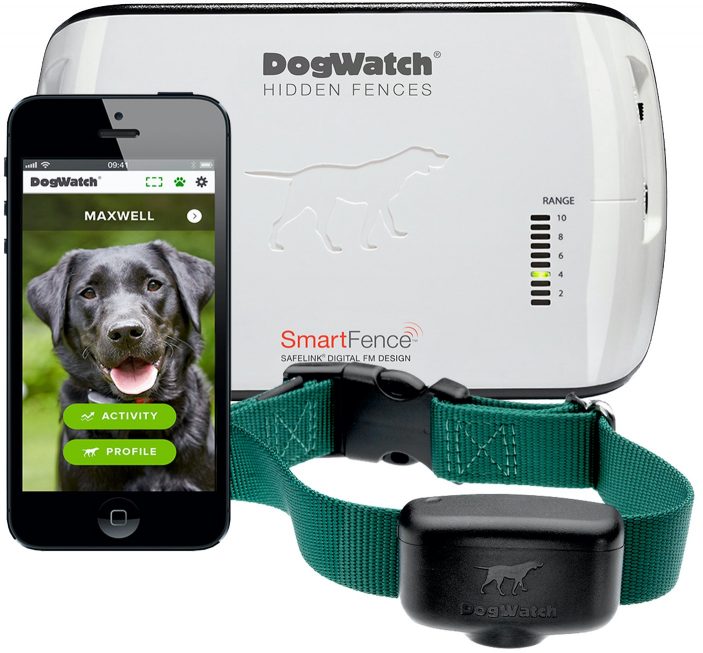
The workhorse. A buried boundary wire gives you precise, predictable containment on any shape of property — irregular lots, multiple exclusion zones (garden, pool, driveway), and split front/back areas. On a typical New England lot with trees, stone walls, and irregular geometry, a wired system is more precise and more reliable than any wireless alternative. This is what we install 90% of the time.
Wire-Free GPS Systems
Wire-free GPS collars (like DogWatch®’s SkyShepherd®) have a legitimate place — mostly on large, open properties of 2+ acres without complex boundaries or dense canopy. GPS needs a clear sky view and doesn’t love heavy tree cover. If someone tries to sell you a GPS-only solution for a half-acre wooded lot, push back. That isn’t the right tool for that job, and you’ll spend the first six months chasing phantom boundary drift.
Indoor Boundaries
Often overlooked: the same correction technology can be used to keep dogs off counters, out of specific rooms, or away from specific furniture. A small wireless transmitter creates a circular “no-go” zone around a trash can, a couch, or a doorway. This is an inexpensive add-on to an outdoor install and solves a lot of “my dog counter-surfs when we’re not home” problems that no amount of training alone has fixed.
Remote Training Tools
Remote trainers, bark collars, and leash trainers share the same correction technology but serve different purposes. A quality local dealer will tell you honestly when one of these tools is the right answer for your specific dog’s behavior problem — and when it isn’t.
What Training Really Looks Like
Hidden fences do not work without proper training. That’s not marketing — it’s a straightforward statement about how the technology interacts with a dog’s brain. A fence without training is just an expensive collar that occasionally surprises your dog.
A proper training protocol runs 10–14 days, in two short sessions per day (10–15 minutes each). The professional installer walks the boundary with you and your dog, using visual flags and the audio-only warning tone for the first several days before any correction is ever introduced. By day 7–10 your dog understands the audio signal and actively avoids the flagged boundary on their own. By day 14 the flags can start coming out, a few at a time, and by week three or four they’re all gone.
If the installer hands you a collar and a boundary map and drives away, you are not going to get good containment. You’re going to get an anxious dog. Training is not an optional upsell — it’s the product.
The Five Questions to Ask Any Hidden Fence Installer
- Is the signal AM or FM? If they don’t know, that’s your answer about their training and technical depth.
- What battery does the collar take, and what does it cost per year? Get the number in writing. Ask whether you can buy replacements anywhere or only from them.
- Who installs and services the system — an employee or a subcontractor? Subcontracted installs are inconsistent. You want the person who sold the system to you showing up for service calls three years later.
- Is there a subscription, monitoring, or “connectivity” fee? There shouldn’t be on any reputable wired or SkyShepherd-style GPS system. Walk away if there is.
- What’s the training process, and is it included? Hidden fences don’t work without proper training. If training is an add-on, the price you’re comparing isn’t the real price.
Bonus question if the conversation is going well: “What happens if my dog breaks through the boundary — how do we troubleshoot that?” A good installer will talk through correction-level adjustment, collar fit, training refreshers, and boundary layout tweaks. A bad one will shrug.
Is a Hidden Fence Right For Your Dog?

Hidden fences work extremely well for most dogs — the published containment success rate with professional installation and proper training is around 99%. They’re less ideal for:
- Dogs with extreme prey drive who will run through any correction to chase a deer or squirrel. This is about 1 in 100 dogs. A reputable installer will tell you honestly if your dog is in that group.
- Dogs who spend long unsupervised hours outside. Hidden fences are a containment tool, not a substitute for supervision. Dogs get bored, diggers dig, and no fence of any kind is a babysitter.
- Properties where the concern is keeping other animals or people out. A hidden fence contains your dog. It doesn’t stop the neighbor’s loose dog from walking right onto your property. If that’s a concern, a physical fence (or both) is the right call.
If you’re not sure whether your dog and your property are a good fit, a reputable local dealer will tell you honestly — even if the answer is “not yet, let’s work on the prey drive first” or “this particular corner of your yard isn’t going to work well.” That honesty is part of what you’re paying a local professional for, and it’s the single biggest reason customers send us referrals.
Frequently Asked Questions
Is DogWatch® cheaper than Invisible Fence®?
Install pricing is generally comparable — within a few hundred dollars either direction depending on lot size and layout. The meaningful savings show up later, primarily on batteries and the absence of any subscription or monitoring fee. Over 10 years, total cost of ownership typically favors DogWatch® by $1,000 or more.
Will the correction hurt my dog?
No. The static correction is similar to the static shock you’d feel from a doorknob on a dry winter day — startling, not painful. Correction levels are adjustable across several steps and are set during training to the lowest level your specific dog responds to. Most dogs only experience the correction once or twice before they learn to respect the audio warning alone.
How long does training take?
Most dogs are reliably contained within 10 to 14 days of twice-daily short training sessions. Stubborn or high-energy breeds may take an extra week. Professional installers include training as part of the package — you should not have to pay extra for it.
What happens in a power outage?
A quality transmitter has battery backup, so the system keeps working for several hours during a power outage — important in our service area, where winter outages are a fact of life. When the transmitter does go offline, the collar defaults to beeping rather than correcting, which is the right failure mode: you’d rather have a dog ignore a silent fence than get corrected for no reason.
Can my dog wear the collar 24/7?
The collar should come off whenever your dog is indoors for extended periods or being walked on a leash outside the containment area. Standard guidance is no more than 8–10 hours at a time, with the contact posts repositioned periodically to prevent skin irritation. Collars are designed to go on and off easily with a standard quick-release.
What if I move?
The collar comes with you. The transmitter comes with you. The buried wire stays with the house (you can disclose it or not when you sell — it’s not a hazard, just copper). Reinstalling at a new property costs less than a brand-new install because you already own the hardware.
Do hidden fences work for cats?
Yes, with the right collar. DogWatch®’s R7mini is specifically sized for cats and toy breeds. Cats learn the boundary slightly faster than dogs on average, probably because they’re already cautious by nature.
What about puppies?
Most trainers recommend waiting until a puppy is at least 5–6 months old before starting hidden fence training — partly for physical reasons (correction levels are calibrated for an adult dog’s response) and partly for developmental reasons. Until then, supervised outdoor time and basic obedience training set the foundation. A good local dealer will tell you to wait if you call too early, even though that means losing the sale for a few months.
The Bottom Line
Invisible Fence® has name recognition. DogWatch® has better core engineering — FM signal, standard batteries, no recurring fees — and, in Eastern CT and Western MA specifically, the local dealer coverage that actually shows up when you need a service call. For most pet owners in our area, that combination wins on a ten-year cost and a ten-year experience basis.
But the brand is less important than the person installing it. A great installer of any system will beat a mediocre installer of the best system on the market. That’s why the five questions above matter more than the logo on the brochure. Ask them. Get the answers in writing. Then pick the person, not the brand.
Free Property Evaluation
Every property is different. Every dog is different. Let’s walk the yard together — bring your questions, bring your skepticism. We’d rather you leave with a clear “not right now” than a system you regret six months in.
Schedule Your Free Evaluation →
Or call us directly: (860) 933-1259 (CT) · (413) 813-2207 (MA)
Invisible Fence® is a registered trademark of Invisible Fence, Inc. This article is an independent comparison written to help pet owners make an informed choice. It is not endorsed by, sponsored by, or affiliated with Invisible Fence, Inc. All claims about specific Invisible Fence® products reflect general industry information available as of publication; verify current specifications with the manufacturer before making a purchase decision.